Pyongyang Metro
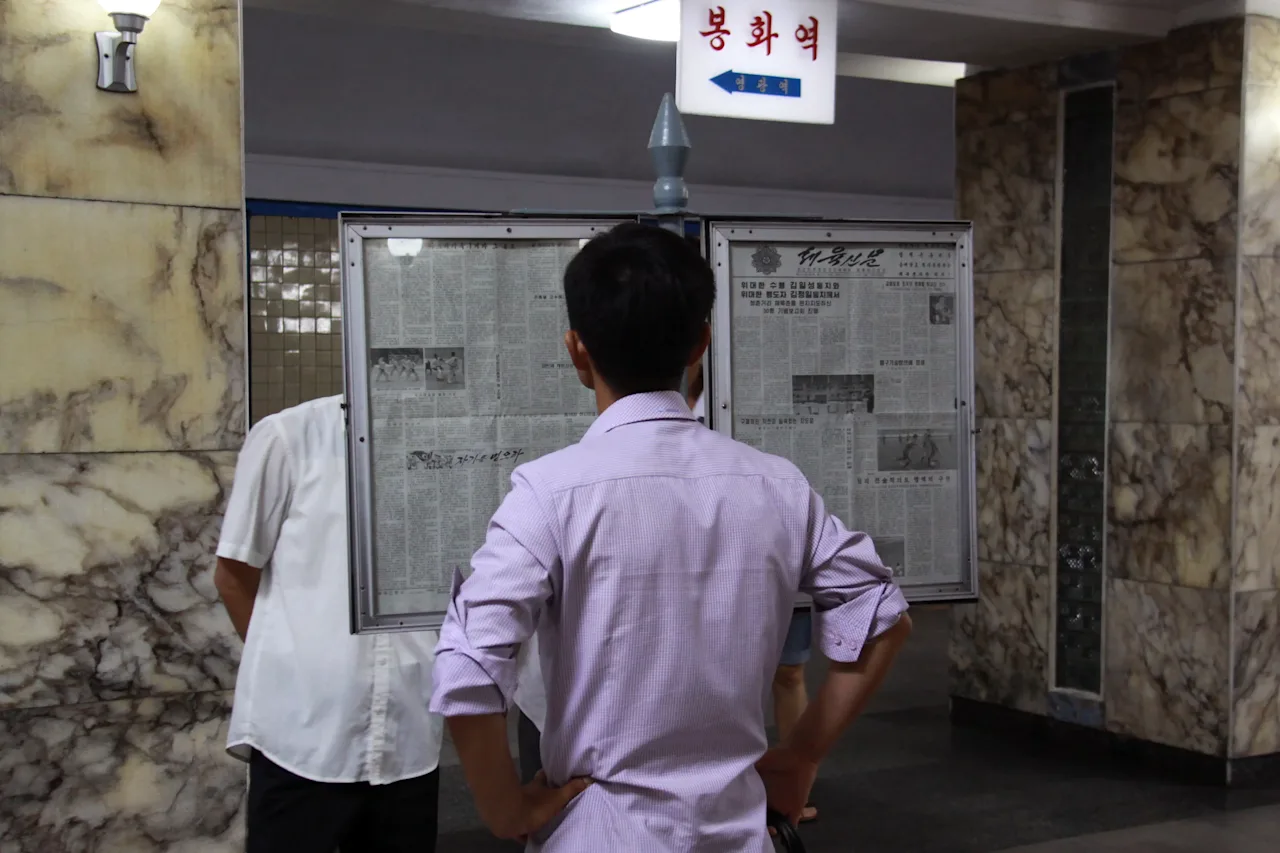
The Pyongyang Metro uniquely serves as transportation in addition to a bomb shelter and art showcase. Riding it offers visitors a look into daily life in the capital.
Guide Content
Unlike many metro systems around the world, the Pyongyang Metro serves not only as public transportation, but also as an artistic showcase, a bomb shelter, and a symbol of national pride. Construction began in the late 1960s, and the system officially opened in 1973. It consists of two lines, the Chollima Line and the Hyoksin Line, which together serve over a dozen stations, each uniquely designed and named after revolutionary themes.
What Makes It Special
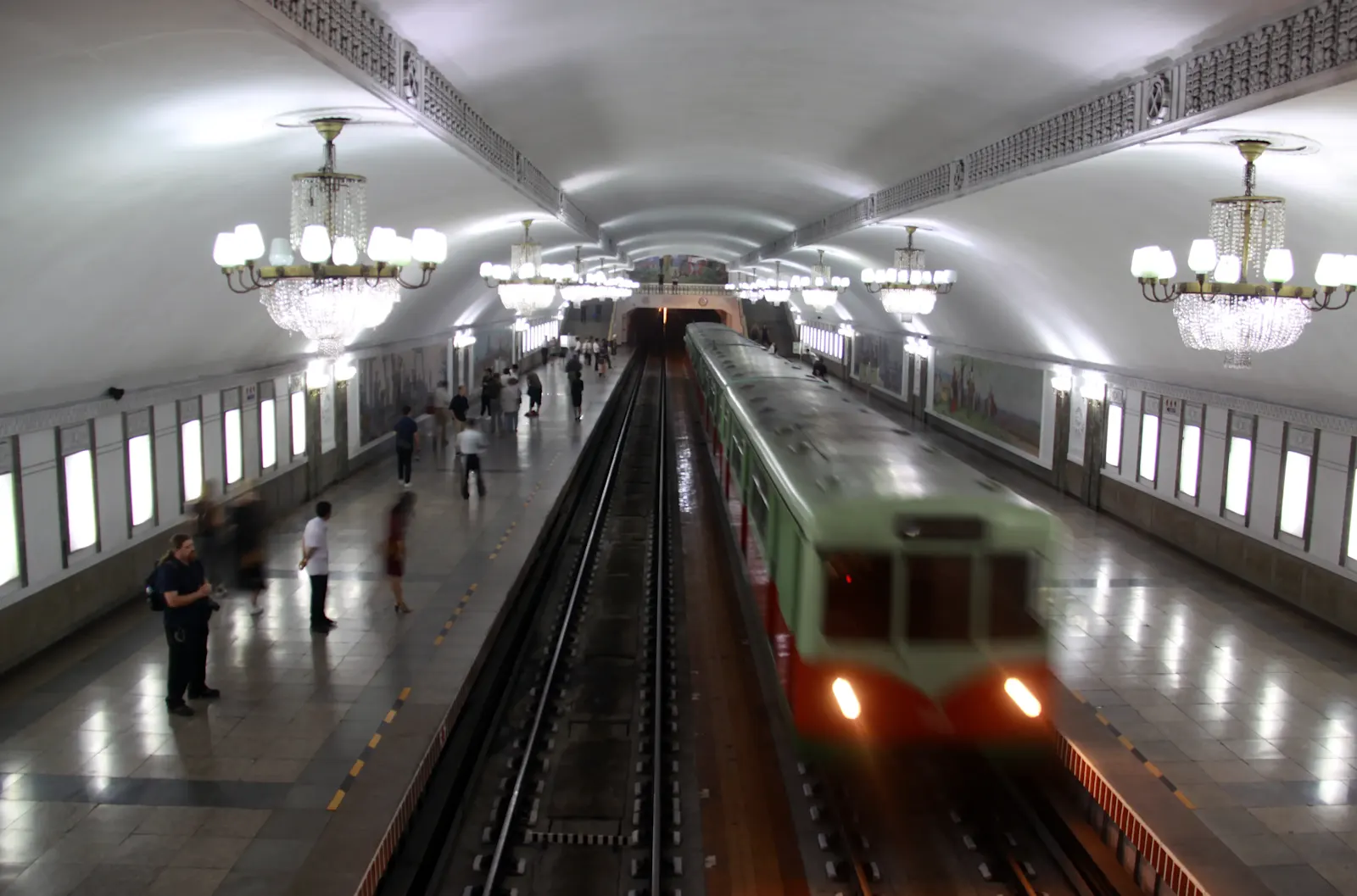
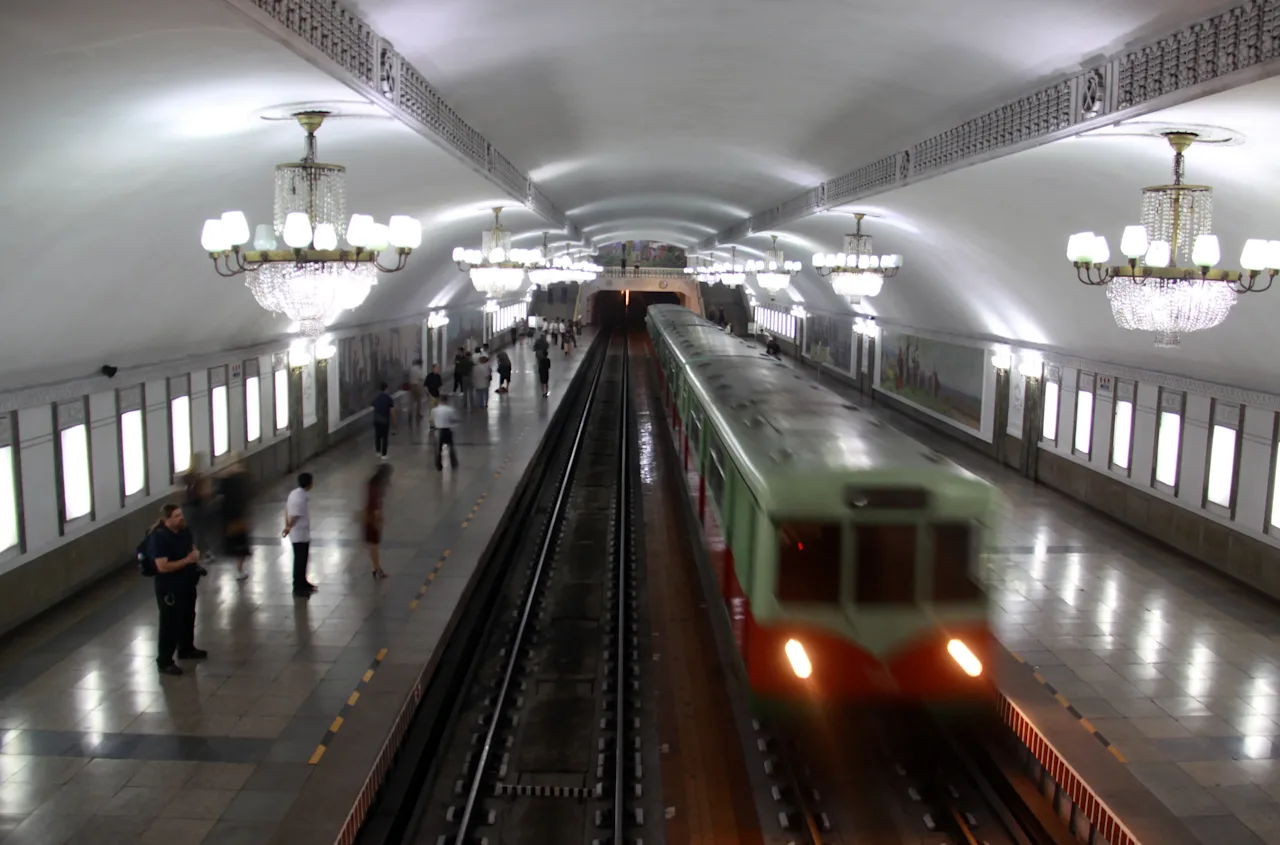
More than a means of transit, the Pyongyang Metro functions as a curated expression of ideology, national aesthetics, and civic discipline. Stations are richly decorated with marble columns, grand chandeliers, socialist-realist mosaics and murals, and patriotic sculptures, accompanied by soft revolutionary music playing in the background. In place of commercial advertisements, walls are adorned with slogans and artworks that glorify the nation and its history.
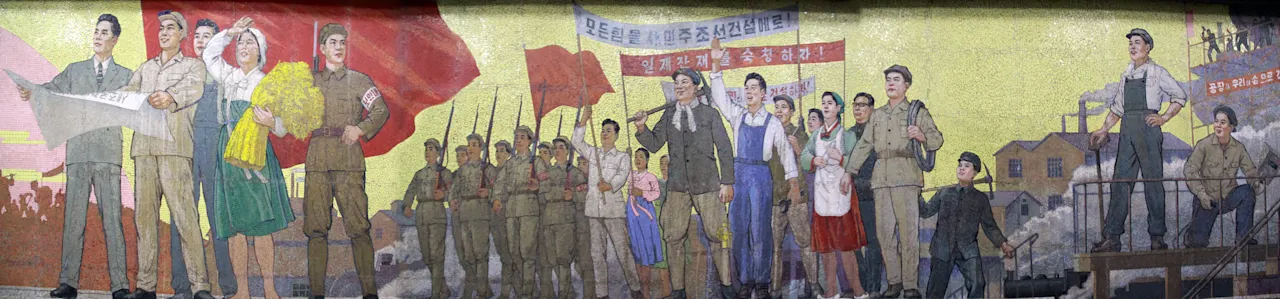
Every station has a story to tell, such as sovereignty, self-reliance, victory, and progress. Unlike the average metro station in most other countries, the stations of the Pyongyang Metro are meant to stir pride and pass on a message. The platforms are wide and gleaming, with lighting that feels more like a theater than a subway. Waiting for a train there is like visiting an art exhibit or a history museum.
Beneath the Surface
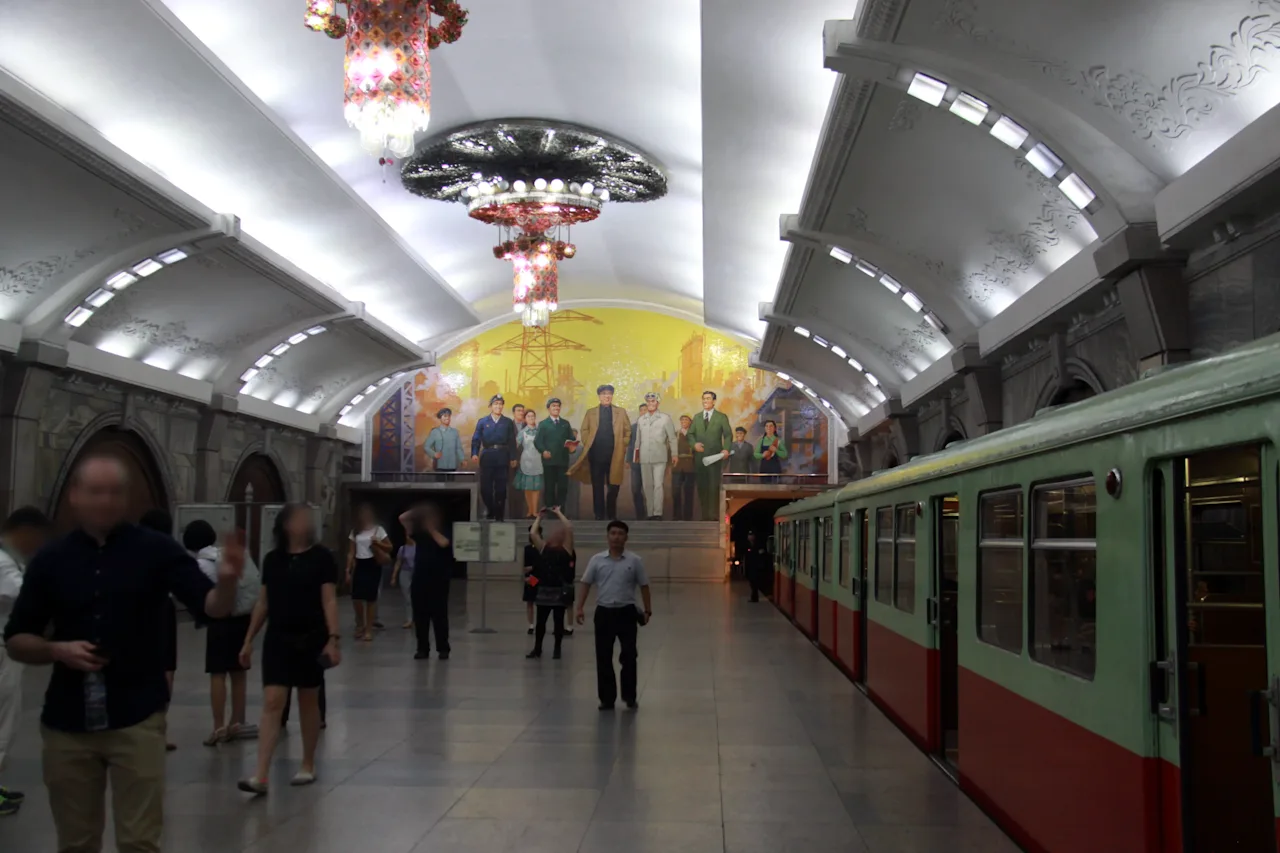
At over 100 meters underground, the Pyongyang Metro is one of the deepest in the world. With civil defense in mind, each station doubles as a bomb shelter, and getting down to them means riding some seriously long escalators that seem to go on forever.
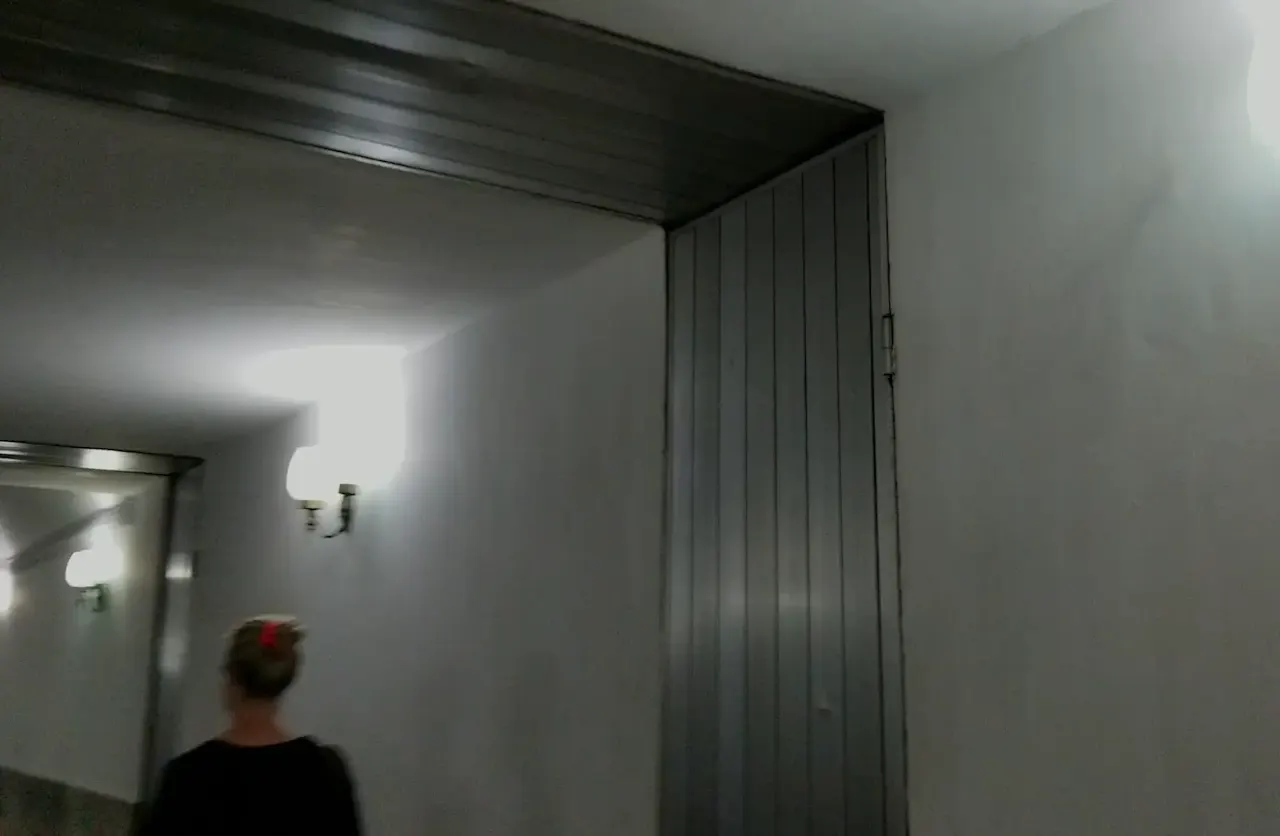
Blast barriers like this can be found in every station. In the event of an attack, three layers of barriers seal off each entrance, shielding those inside from the force of a blast.
While locals use the entire system for their daily commute, tourists typically ride between four and six stations. That said, Taedong Tours can often arrange longer rides depending on your itinerary.
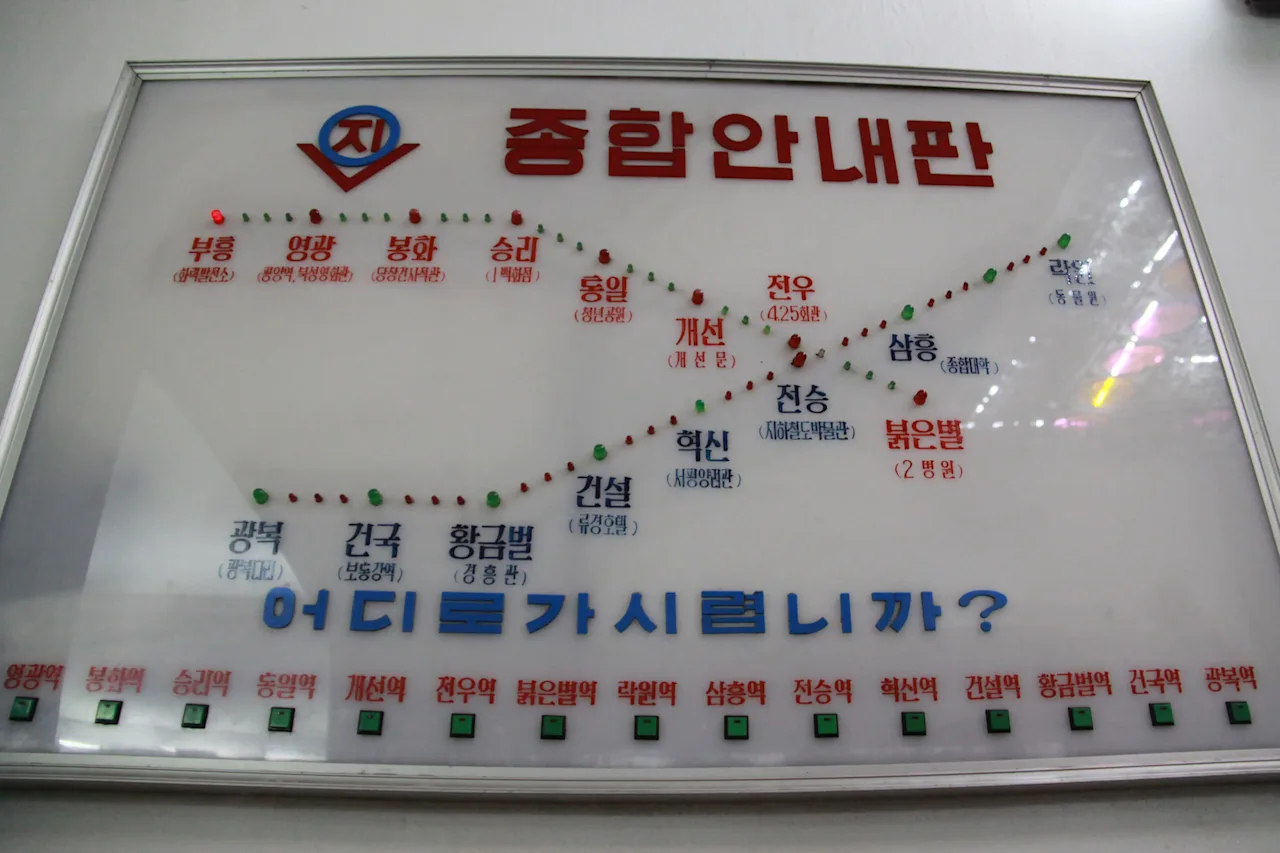
Some of the most memorable stops include Puhung (Rejuvenation), one of the most ornate stations and a favorite for photographers; Yonggwang (Glory), famous for its towering chandeliers and detailed murals; Kaeson (Triumph), located near the Arch of Triumph and themed around Korea's liberation from Japanese rule; and Pulgunbyol (Red Star), which is known for its strong ideological theme and vibrant mosaics.
Each station has its own look and story, offering a fresh visual experience every time the doors open.
The Trains
Most of the trains running on the Pyongyang Metro today were originally built in West Germany. Yes, you read that correctly, West Germany, despite the common and understandable misconception that they came from the East. They've since been refurbished and adapted for local use, giving them a unique, retro look that feels frozen in time.
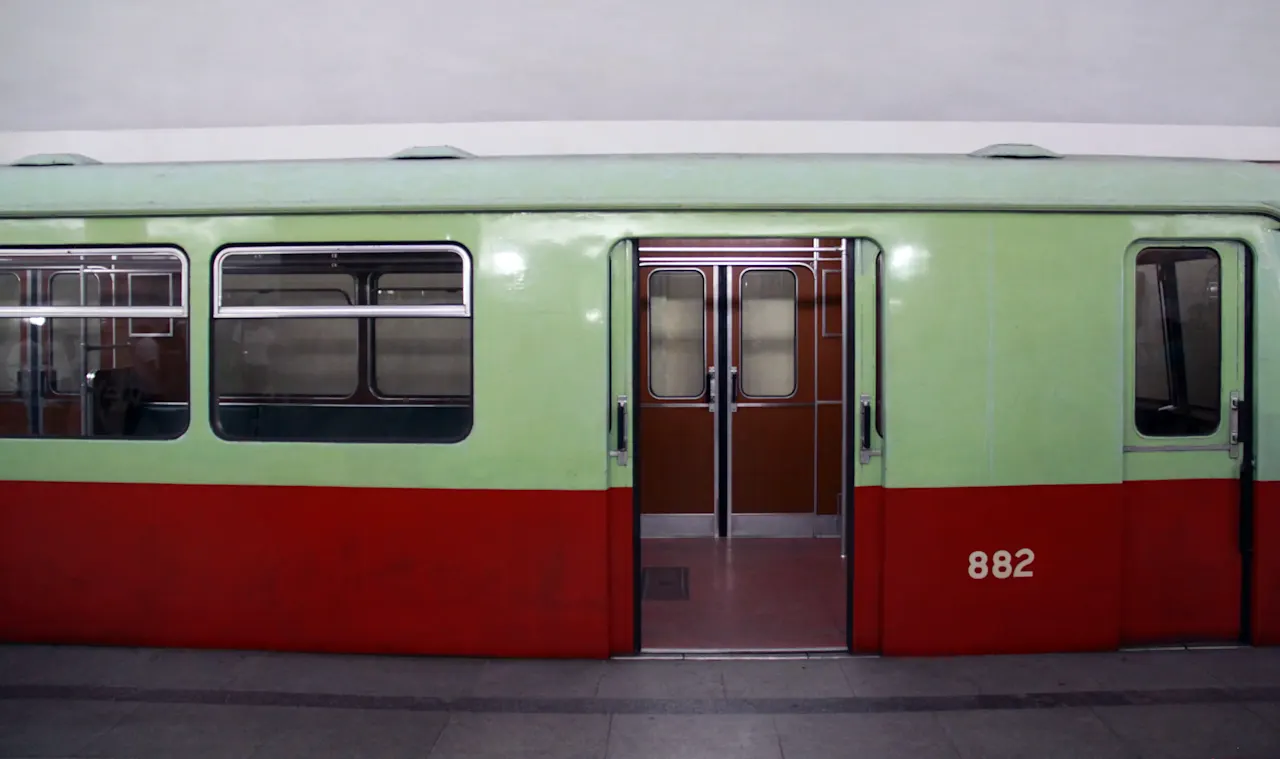
Inside, the carriages are simple and quiet. There are no advertisements or commercial signage, just polished wood paneling, plain benches, and portraits of President Kim Il Sung and General Kim Jong Il above the doors between carriages.
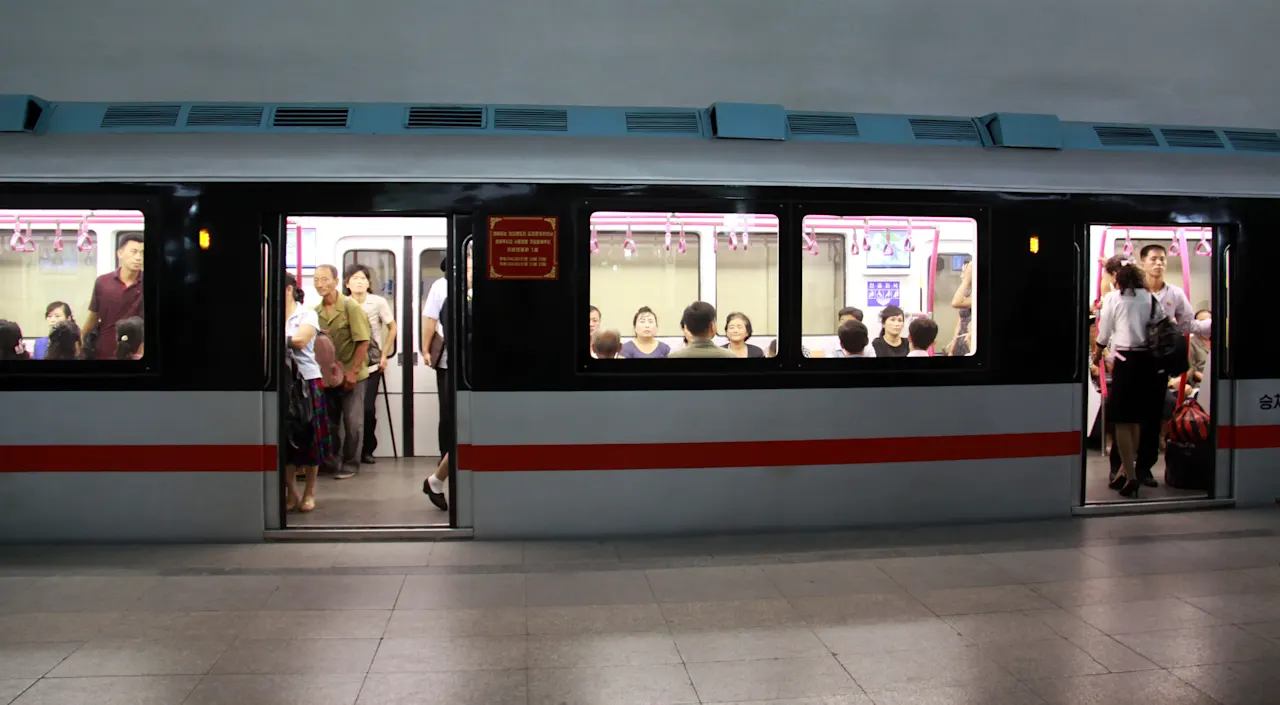
Since 2016, a new generation of domestically produced trains have been rolled out. These sleek, modern trains feature bright lighting, TV displays, and digital route maps. If the timing works out, you might find yourself riding one of these newer models!
Visiting the Metro with Taedong Tours
Riding the Pyongyang Metro is included in nearly all Taedong Tours itineraries, with options for extended travel available on request.
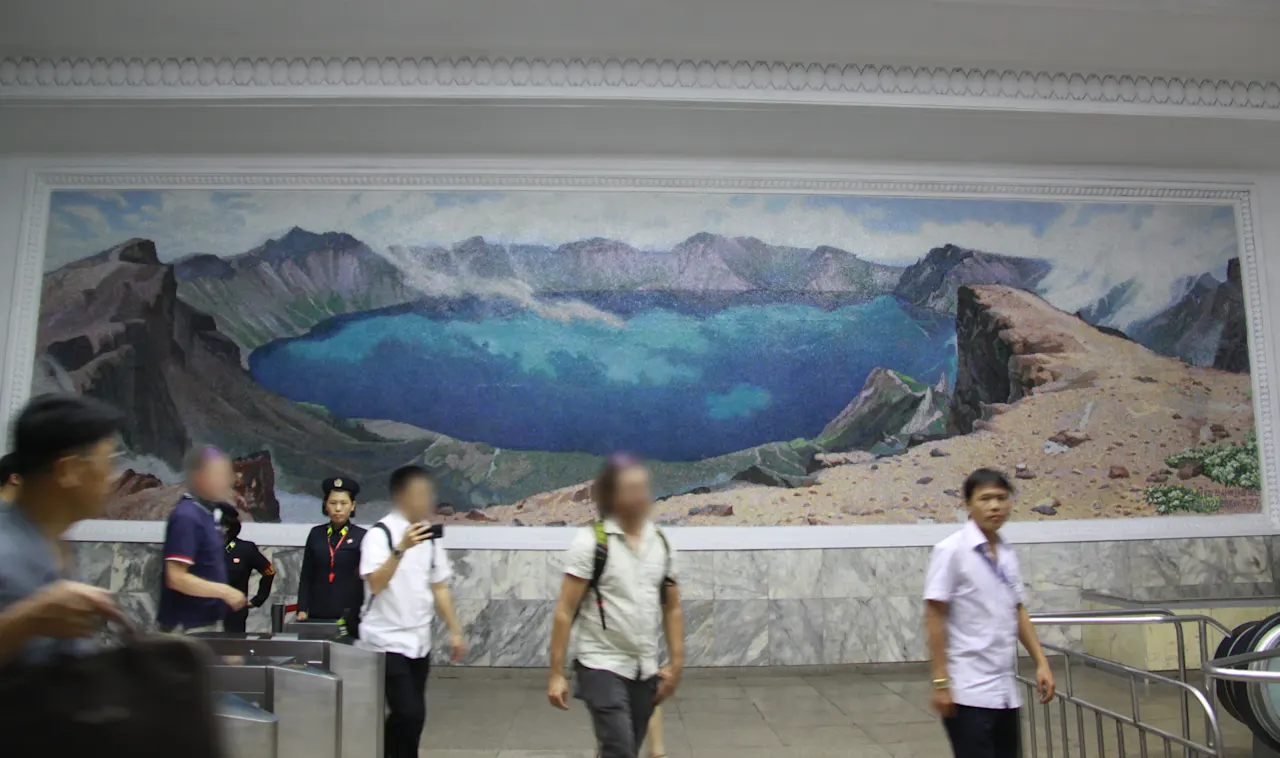
You'll begin with a dramatic ride down long escalators deep underground. Along the way, your guide will share insights about the unique themes and stories behind each station you visit. You'll have the chance to ride alongside local commuters, students, and workers, experiencing everyday life in the city. During the metro tour, there will be plenty of opportunities to take great photos.
Photography & Conduct
Photography is allowed in most stations, but it's important to be respectful. Avoid using flash, and always use common sense and practice good etiquette—don't shove cameras in locals' faces and be sure to ask before taking close-up photos of anyone. Throughout the ride, quiet and polite behavior is expected to keep the atmosphere comfortable for everyone.