Rason
The DPRK's first Special Economic Zone, bordering China and Russia. An economic testing ground where new ideas debut and a distinct atmosphere awaits.
Guide Content
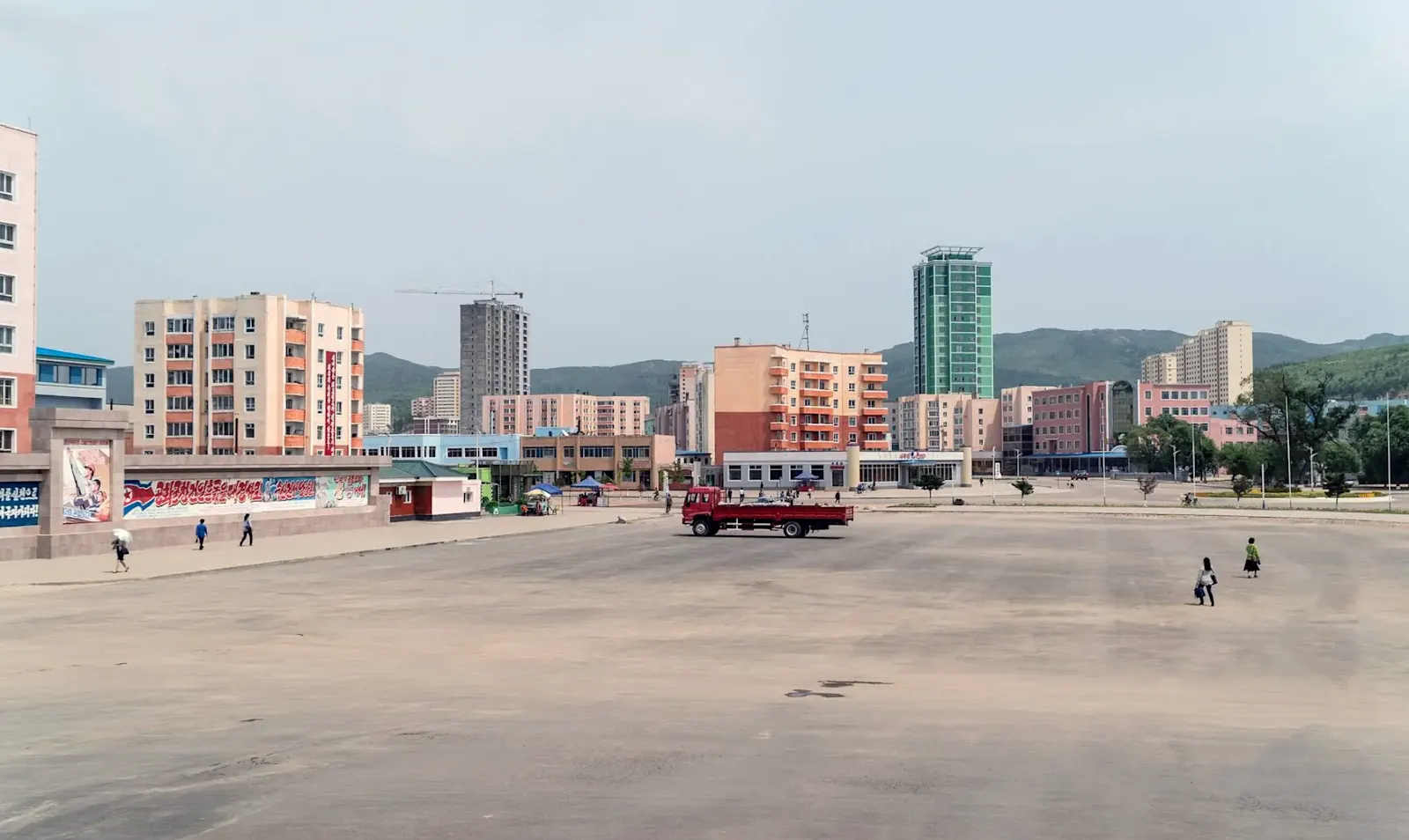
Rason (라선/羅先), the DPRK's first and most prominent Special Economic Zone, lies at the far northeastern tip of the country, bordering both China and Russia. Its name blends the two subdivisions that form it: Rajin (라진/羅津) and Sonbong (선봉/先鋒). Rason's rules are a bit different from the rest of the country, and the atmosphere is marked by cautious experimentation. This is the country's economic policy lab, where new ideas debut before making their way elsewhere, from the first mobile network to the first card payment system. Foreigners can invest here and even own property, giving Rason a feel that is distinct from the rest of the DPRK while still unmistakably part of it. A trip here often leaves visitors with more questions than answers, in the best possible way.
Entry into Rason works differently from the rest of the DPRK, which is separated from it by an internal border. Instead of individual visas, visitors use a single group entry permit. For the traveler, the paperwork is pretty much the same as a visa application, but one document covers the entire group.
We recommend Rason for those who have already seen Pyongyang and want something that is at once familiar and different. When possible, pair it with a visit to neighboring North Hamgyong Province, to which Rajin and Sonbong once belonged, for added contrast and context.
Getting to Rason
Our journeys to Rason usually set off from Beijing, continuing north to Yanji (延吉), the capital of the Yanbian Korean Autonomous Prefecture (延邊朝鮮族自治州) in China’s Jilin (吉林) Province. If you prefer, you can make your own way to Yanbian and join the group there. The next morning, we travel by private van or bus—depending on group size—towards the Quanhe-Wonjong Border Bridge. After clearing China’s exit formalities, you’ll cross the Tumen River into the DPRK, pass through Korean customs, and be welcomed by your local Rason guides. From there, it’s a 51-kilometer ride into Rajin.
When combining Rason with North Hamgyong—home to Mt. Chilbo and the port city of Chongjin—the journey is typically made by road.
It is also possible to reach Rason from Pyongyang by train, though service runs only a few days each month. For this reason, it is rarely included in group itineraries, but can be arranged for private tours.