

Staying Connected in China
China's digital ecosystem is different from most of the world. Learn how to prepare your devices so everything works smoothly once you land.
Guide Content
As our tours typically begin and end in China, we recommend that travelers visiting the DPRK (North Korea) with Taedong Tours prepare their phones and laptops in advance to ensure smooth connectivity while in China.
Accessing International Services
Many international apps and websites such as Gmail, Instagram, YouTube, X, and WhatsApp are not directly accessible on the Chinese mainland due to network restrictions commonly referred to as the “Great Firewall” (officially the Golden Shield system).
Popular third-party tools historically used by international travelers to access these services are now inconsistent or no longer functional, making them unreliable for most visitors. In particular, many VPNs that are openly advertised in English as being capable of bypassing the firewall are frequently restricted or blocked. Such claims should therefore be taken with a grain of salt, as reliability varies and a service that works one day may stop working the next. As a general rule, services that work consistently are rarely openly advertised in English. For short-term visitors, there are simpler and more reliable ways to stay connected that do not require bypassing the firewall, which we outline below.
For most travelers, the most stable solution is to prepare connectivity in advance. We recommend using a travel-focused prepaid eSIM or international roaming plan that provides unrestricted data access outside the domestic network environment. Providers such as Travel Gator and Nomad eSIM are commonly used by international visitors for this purpose.
Travelers using local prepaid SIM cards or accessing the internet via hotel or public Wi-Fi will require additional configuration to maintain reliable access to international services. If needed, our team can provide updated, case-specific guidance after booking. We do not publicly list or promote specific access tools, as network conditions and availability change frequently.
Messaging
The primary communication platform in China is WeChat, a messaging app that is also widely used for voice and video calls, group chats, payments, and much more.

We strongly recommend downloading and setting up WeChat prior to arrival, as it is essential for both travel coordination and day-to-day communication within China.
Mobile Payments
Mobile payments are widely used in China, with most transactions conducted via WeChat Pay (integrated within WeChat) and Alipay. Today, both platforms support linking foreign credit cards, allowing visitors to participate in the world’s largest mobile payment ecosystem. We recommend completing account setup and verification in advance to ensure full functionality upon arrival.
In practice, foreign-linked cards generally work well for payments at larger retailers, restaurants, and official merchants. However, payments to individuals and some smaller vendors such as certain mom-and-pop shops or food stalls may still require a Chinese bank card-linked account.
As a result, travelers using foreign cards may occasionally encounter situations where mobile payments are not accepted. We therefore recommend carrying some cash as a backup for convenience.
For travelers booked on our tours, our team can provide assistance with setup and configuration as part of pre-departure preparation.
Navigation & Transportation
Even if the Great Firewall is circumvented, Google Maps is essentially non-functional on the Chinese mainland due to its outdated data. We recommend downloading AMap in advance, specifically the international version called AMap Global, for accurate real-time navigation, public transport routing, and local points of interest.
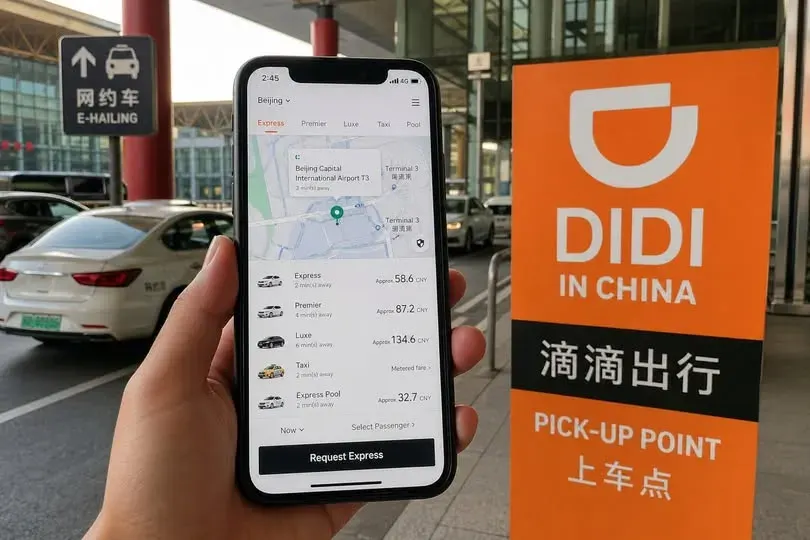
Ride-hailing services such as Uber, Grab, and Lyft are not operational in mainland China. The primary platform used is Didi. We recommend installing and setting up Didi prior to arrival to ensure smooth transportation during your time in China.
Communication
While English-speakers can be found in major cities such as Beijing, Shanghai, and Guangzhou, it is still not widely spoken, especially in smaller cities and towns. Therefore, we recommend installing translation tools such as Baidu Translate prior to arrival. In addition, AI-based tools such as DeepSeek or Doubao can be useful for real-time assistance with basic communication and translation when international services are limited.
Charging Devices
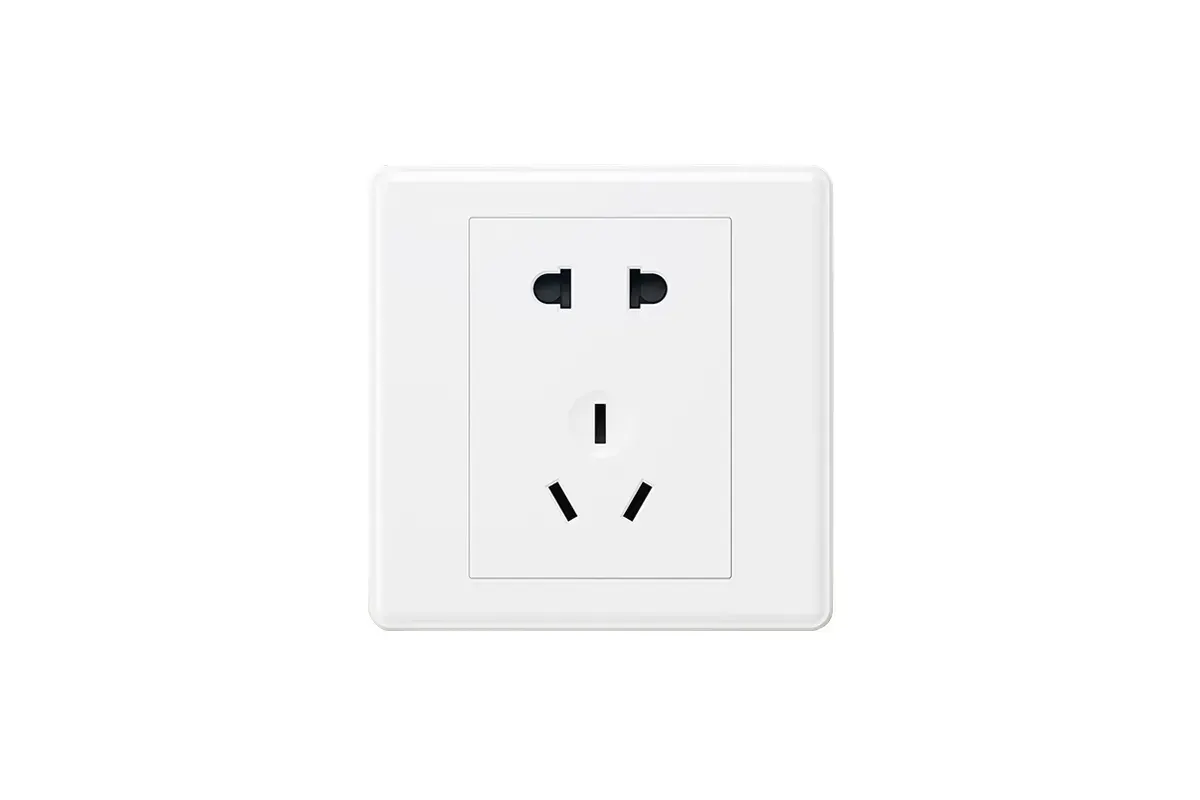
Chinese outlets are built as multi-standard sockets that accept Type A (US), Type C (European), and Type I (Australian) plugs, and the standard voltage is 220V at 50Hz. Most modern phone and laptop chargers are dual voltage and work without issue, but travelers from regions using 100–120V systems such as the United States and Japan should ensure their devices support dual voltage before use. In some cases, voltage converters may be required for non-dual-voltage devices. Travelers from countries such as the UK and other regions with different plug types should bring a universal travel adapter.